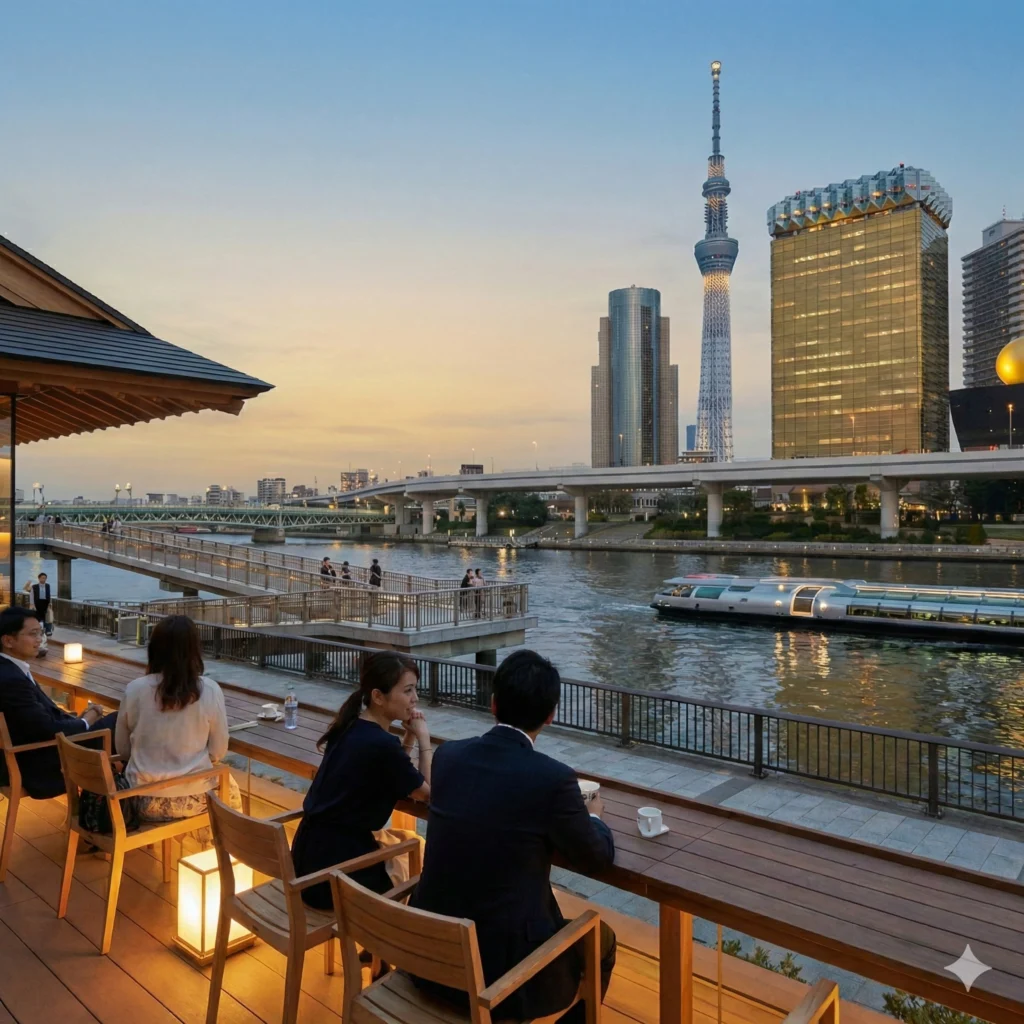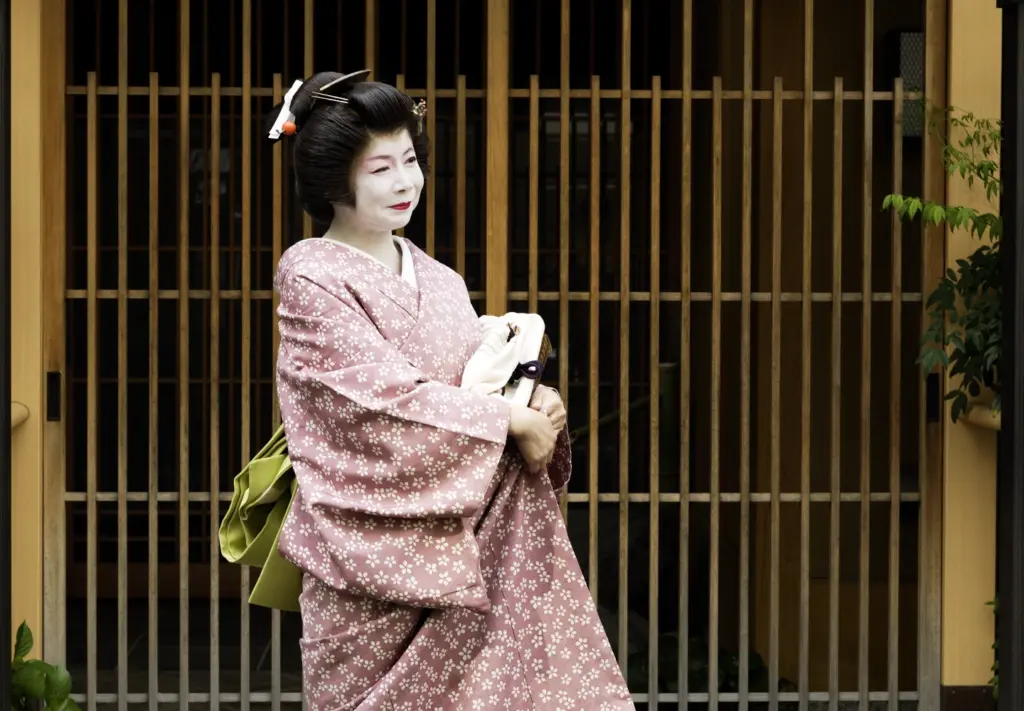
When one thinks of Asakusa, the bustling Kaminarimon and Senso-ji Temple often come to mind. However, step just beyond the main crowds to the north of Senso-ji, an area known locally as “Kannon-ura,” and you will find the Karyukai (geisha district)—a world where Japanese tradition has thrived since the Edo period.
This article introduces the captivating world of the Asakusa Geisha, the very heart of this traditional district.
History and Heritage of Asakusa Geisha
The origins of geisha in Asakusa date back to the Edo period. While distinctions were once blurred, the role of the geisha was eventually strictly defined as an entertainer who provides art (gei), in contrast to the courtesan who offered physical intimacy.
In the Meiji era, various local geisha groups were consolidated to form the “Asakusa Park Geisha,” which became the foundation of the current Asakusa Geisha and the Tokyo Asakusa Kumiai (Asakusa Kenban)—the association that supports their activities.
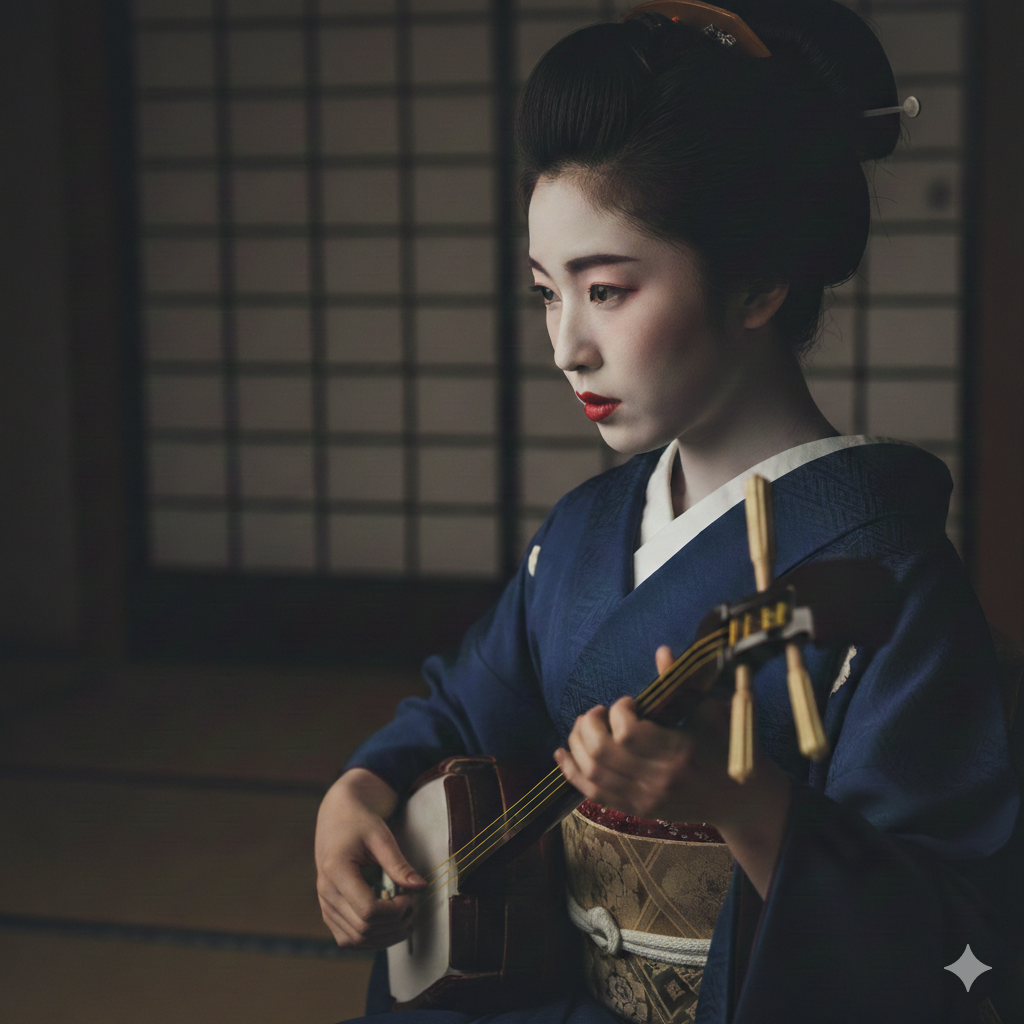
Asakusa Geisha are considered “Professionals of Art” who inherit and preserve traditional Japanese performing arts. They receive training directly from masters of Kabuki actors, Japanese dance, and shamisen (a three-stringed instrument), constantly refining their skills.
The Flower of the Ozashiki: The Geisha’s Role and Art
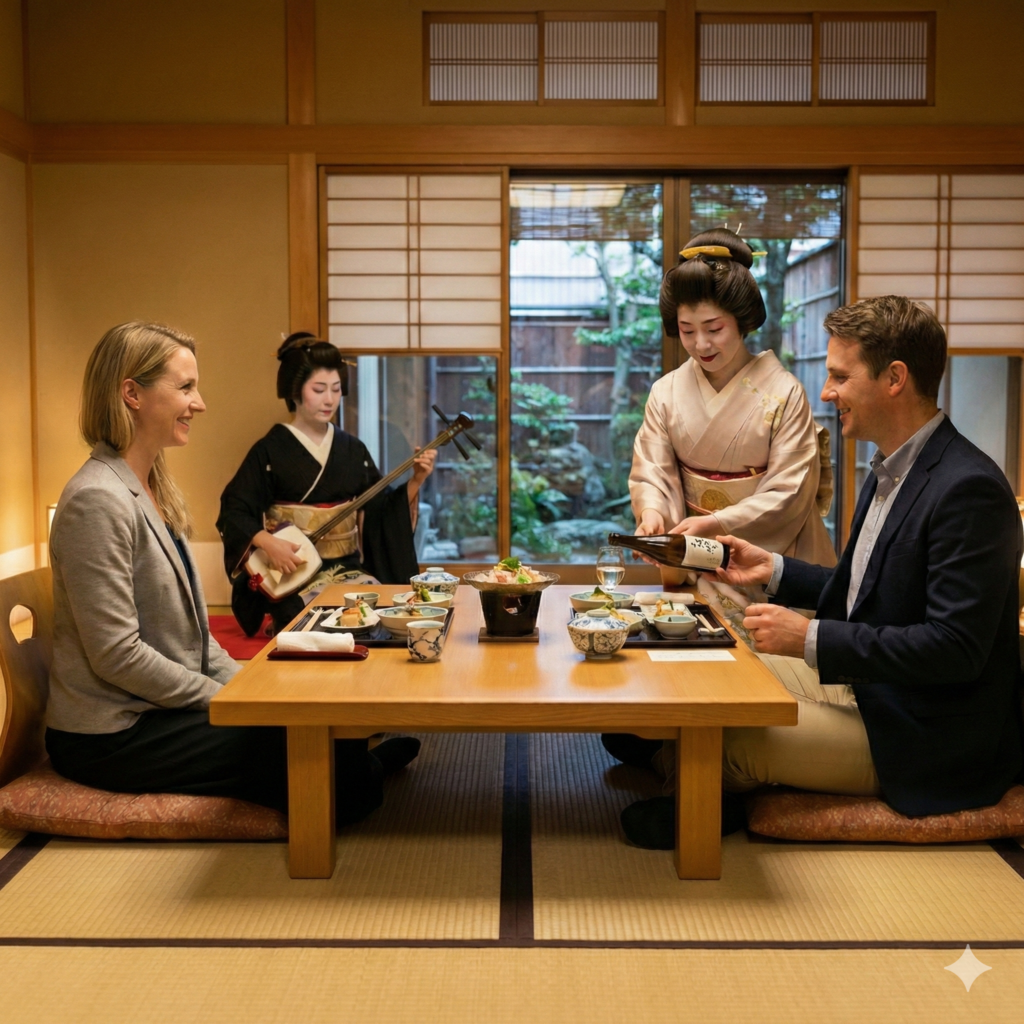
The primary role of the geisha is to entertain guests at banquets held in traditional restaurants (known as ozashiki). Beyond simply accompanying guests, they perform refined arts like singing, dancing, and shamisen, using conversation and elegant gestures to create a vibrant and sophisticated atmosphere.
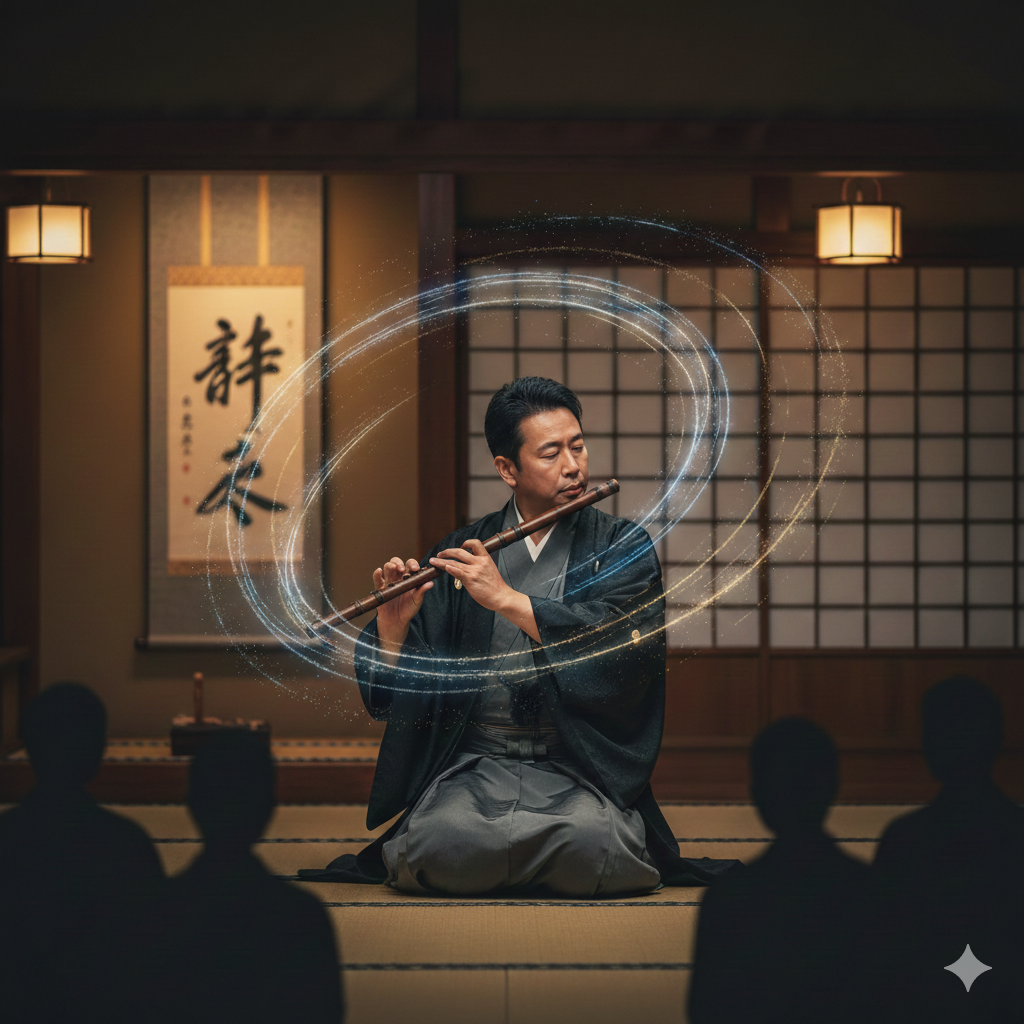
Daily Dedication: Geisha dedicate themselves to daily practice in dance, taiko drums, flute, and shamisen to continuously perfect their artistry.
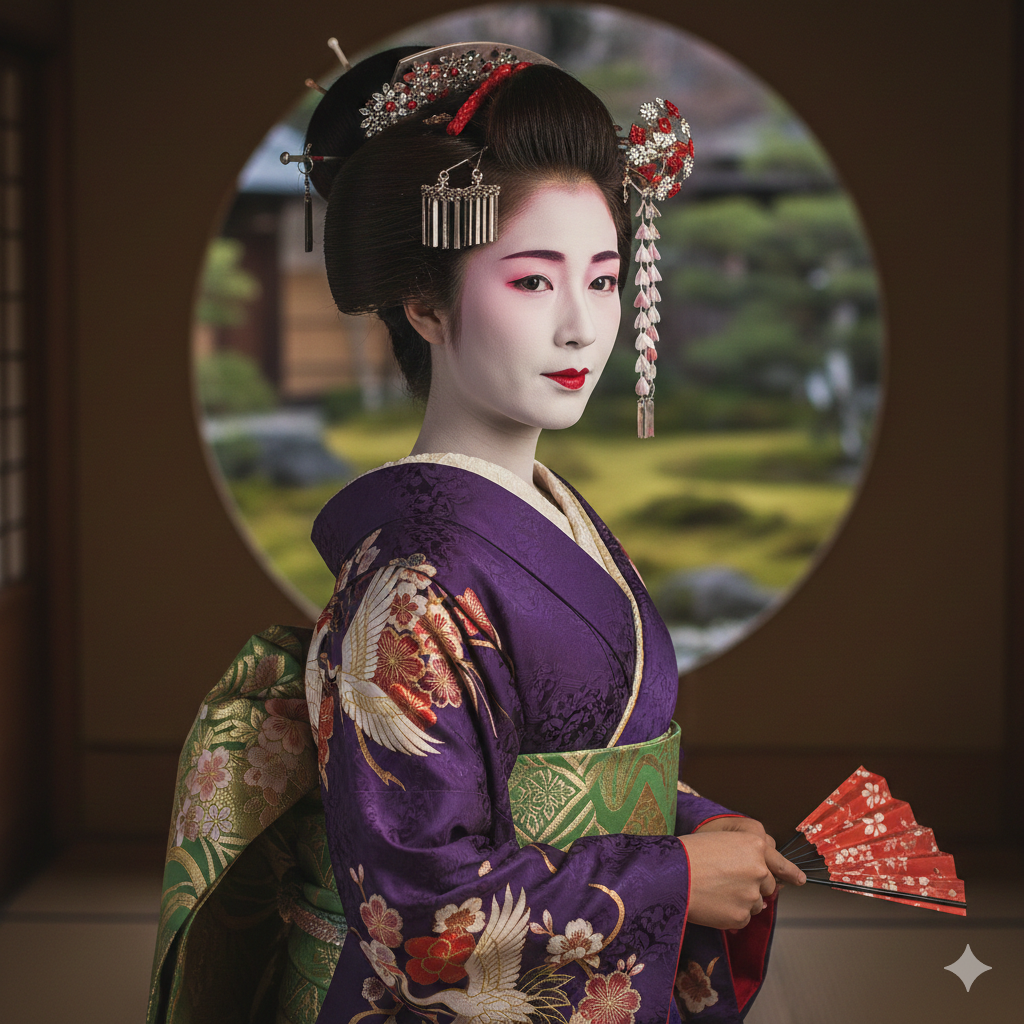
“Ippon” and “Hangyoku”: Fully trained geisha are called Ippon (one line), while apprentices are known as Hangyoku (half jewel) or Hinagi. The name Hangyoku historically referred to the fact that their fee was half that of a full geisha.
What they offer is not just polished art, but a quintessential Japanese experience of hospitality and the enjoyment of refined timing (iki).
The Nation’s Rarest Entertainer: The Hokan (Male Geisha)
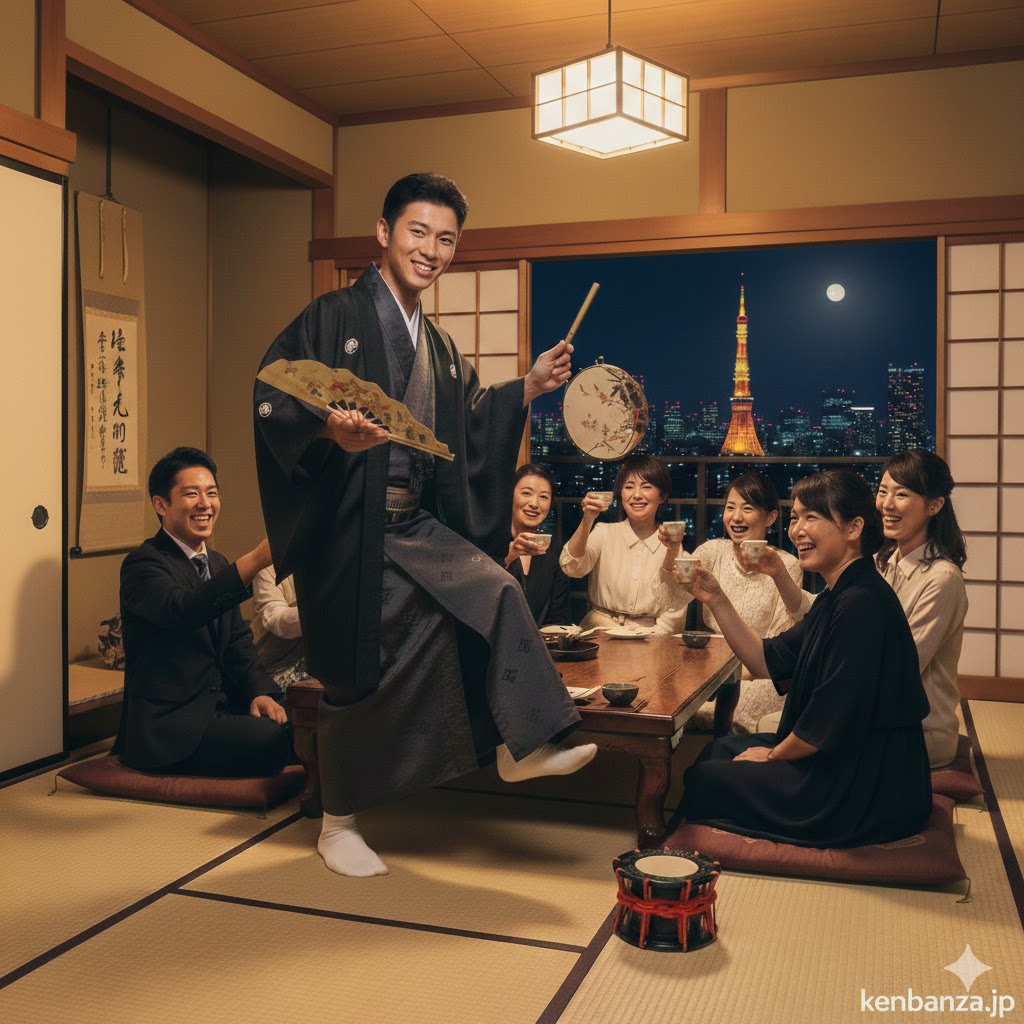
The Asakusa Karyukai is home to the extremely rare male geisha, known as Hokan (or Taikomochi), a performer found almost exclusively in Asakusa today.
The Hokan acts as a dedicated comedian and master of ceremony, known as the “drum-beater” (the literal translation of taikomochi), who cheers up the guests and livens the party with comical dances, pantomime, and witty conversation. While there were once many Hokan across Japan in the early Showa period, their numbers dwindled. Asakusa remains one of the few precious places where this unique form of entertainment can still be experienced.
Contemporary Activities of Asakusa Geisha
The Asakusa Geisha are based at the Asakusa Kenban (Tokyo Asakusa Kumiai) in the Kannon-ura district.
Currently, the Asakusa Karyukai has approximately 8 traditional restaurants where geisha can be called, and about 25 geisha and 7 Hokan (male geisha) continue to preserve their traditions.
In addition to private ozashiki, they actively hold events to allow the general public to experience their culture:
Beer Ozashiki: A popular, casual event where guests can enjoy beer and socialize with the geisha and Hokan in a relaxed setting while they are wearing yukata (summer kimono).
Ozashiki Odori (Parlor Dance): Public performances held at local venues, offering a chance to see their authentic dances.
When you visit Asakusa, take a moment to venture into the quiet side streets of Kannon-ura. You might just catch a glimpse of this beautiful, living tradition—the quintessential “Iki” (chic, refined elegance) of Tokyo.