When you step into the world of Asakusa’s traditional performing arts, you will hear a word that defines everything we do: “Iki” (粋).
While the world often flocks to see the colorful, doll-like appearance of the Maiko (apprentice), the true connoisseur seeks the Geisha of Asakusa. To understand the Geisha is to understand the spirit of “Iki”—a uniquely Japanese aesthetic of refined, understated elegance and professional mastery.
1. Professional vs. Apprentice: The Hierarchy of Art
It is a common misconception to view “Geisha” and “Maiko” as the same. In the strict tradition of the Kenban, there is a clear distinction in rank and soul:
-
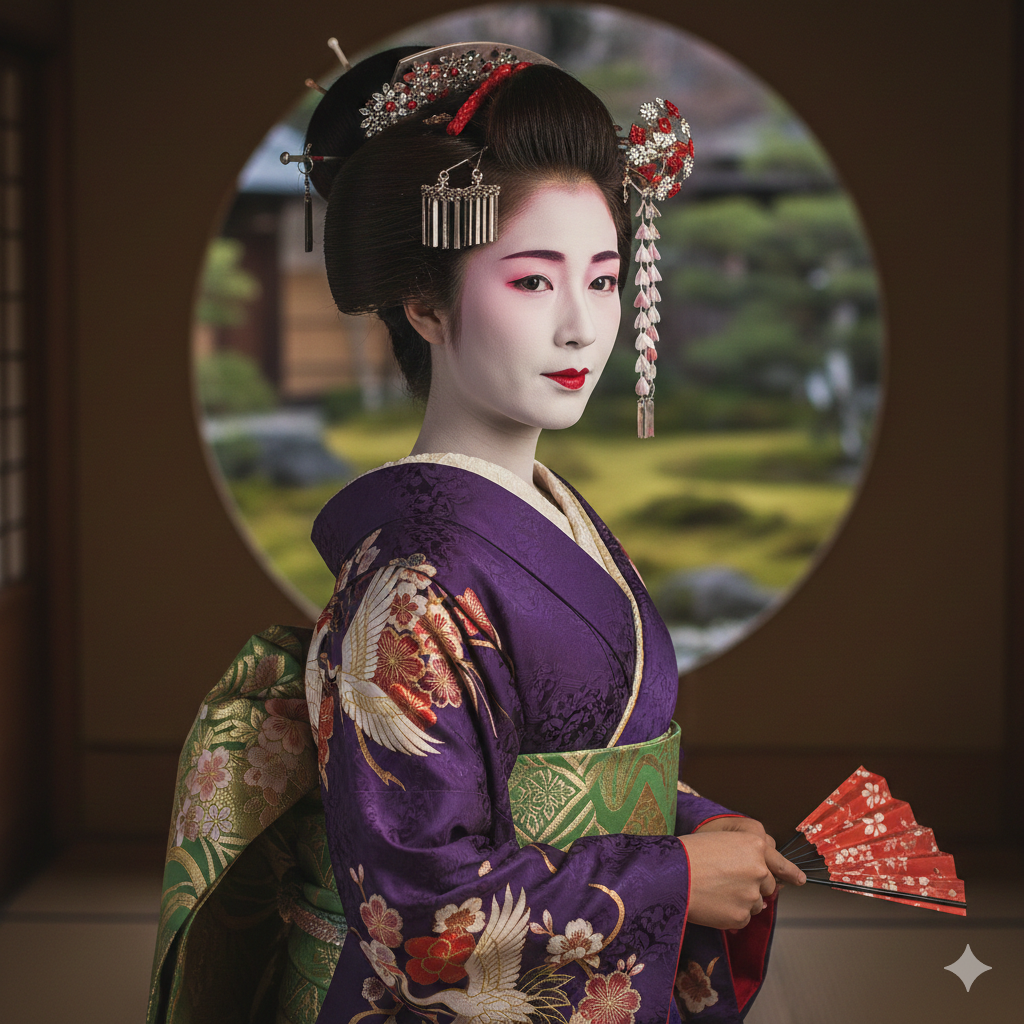
The Hangyoku (Apprentice): In Asakusa, apprentices are called Hangyoku (meaning “half-jewel”). They are students in transition, wearing flamboyant costumes to mask their developing skills.
-
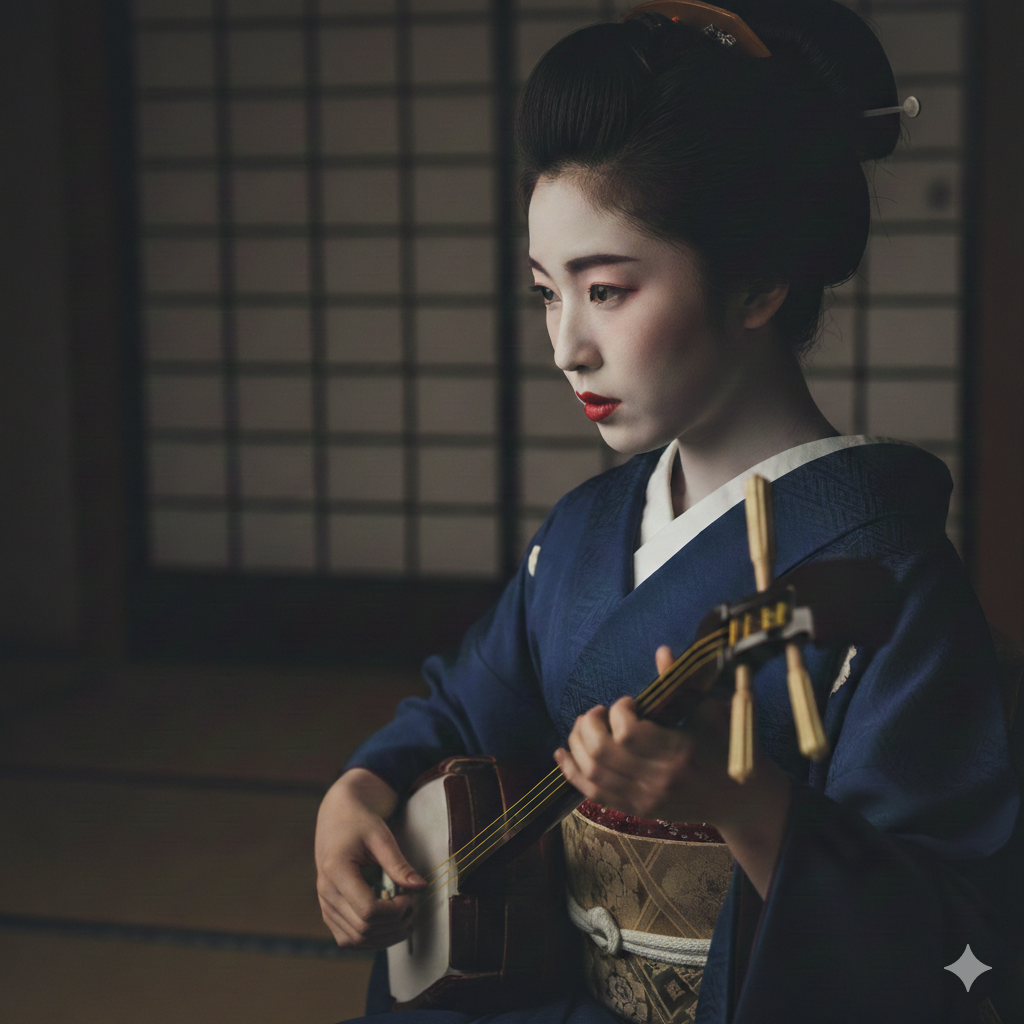
The Geisha (The Professional): A Geisha is an artist who has moved beyond the flashy colors of youth. She has “turned her collar” from the red of an apprentice to the white of a professional. She is a master of her instrument, her dance, and her mind.
2. “Iki”: The Soul of Asakusa Geisha
What separates an Asakusa Geisha from any other performer is the philosophy of Iki.
Unlike the “Miyabi” (courtly elegance) of Kyoto, the Iki of Asakusa is the aesthetic of the Edo period’s urban elite. It is defined by:
-
Understated Sophistication: A Geisha does not need heavy ornaments. Her beauty lies in a simple, perfectly tied kimono and a sharp, graceful silhouette.
-
Detached Resilience: “Iki” is about being cool and composed. A Geisha handles any situation with wit and a calm, sophisticated spirit.
-
Authentic Mastery: An apprentice (Hangyoku) is still practicing. A Geisha, embodying “Iki,” makes the most difficult musical performance or dance look effortless. This “effortless perfection” is the height of professional artistry.
3. The Prestige of the White Collar
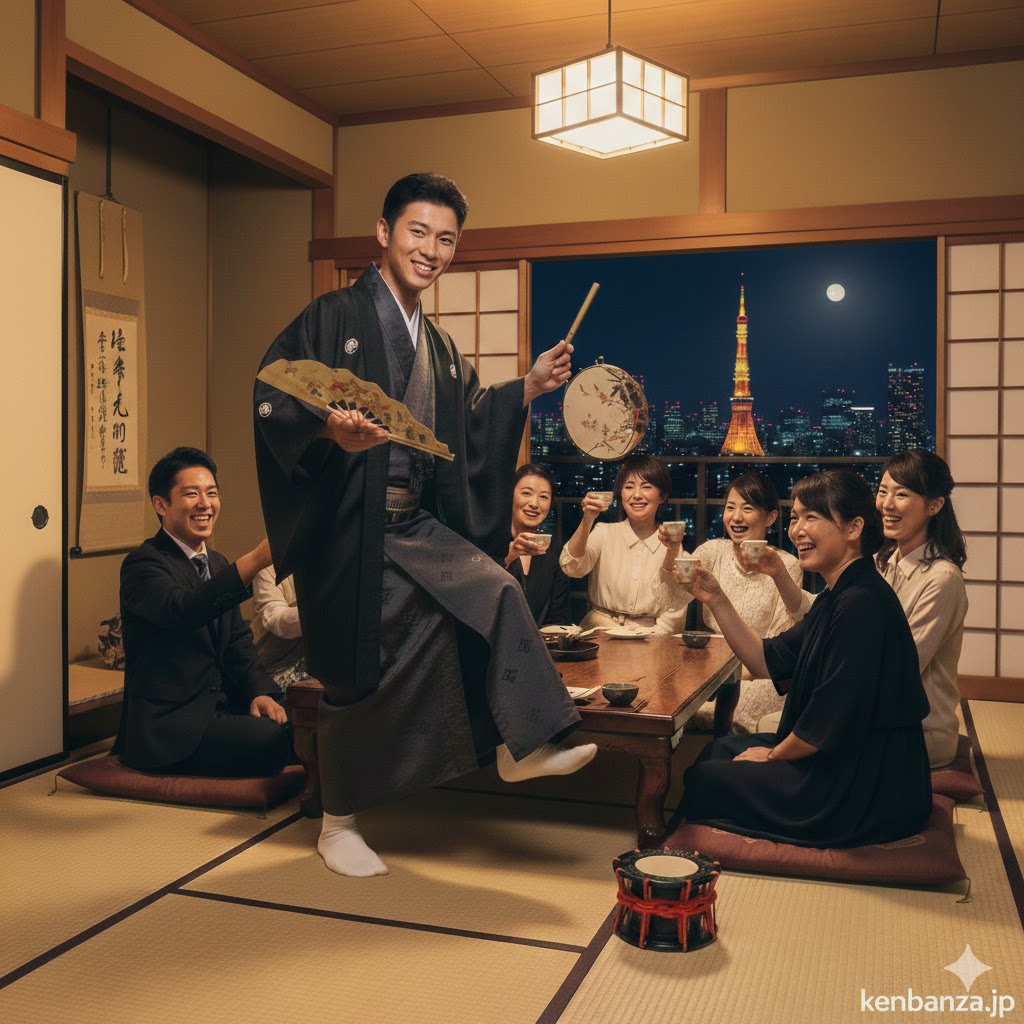
When you meet a Geisha through Kenbanza, you are meeting someone who has dedicated their life to the “Iki” lifestyle.
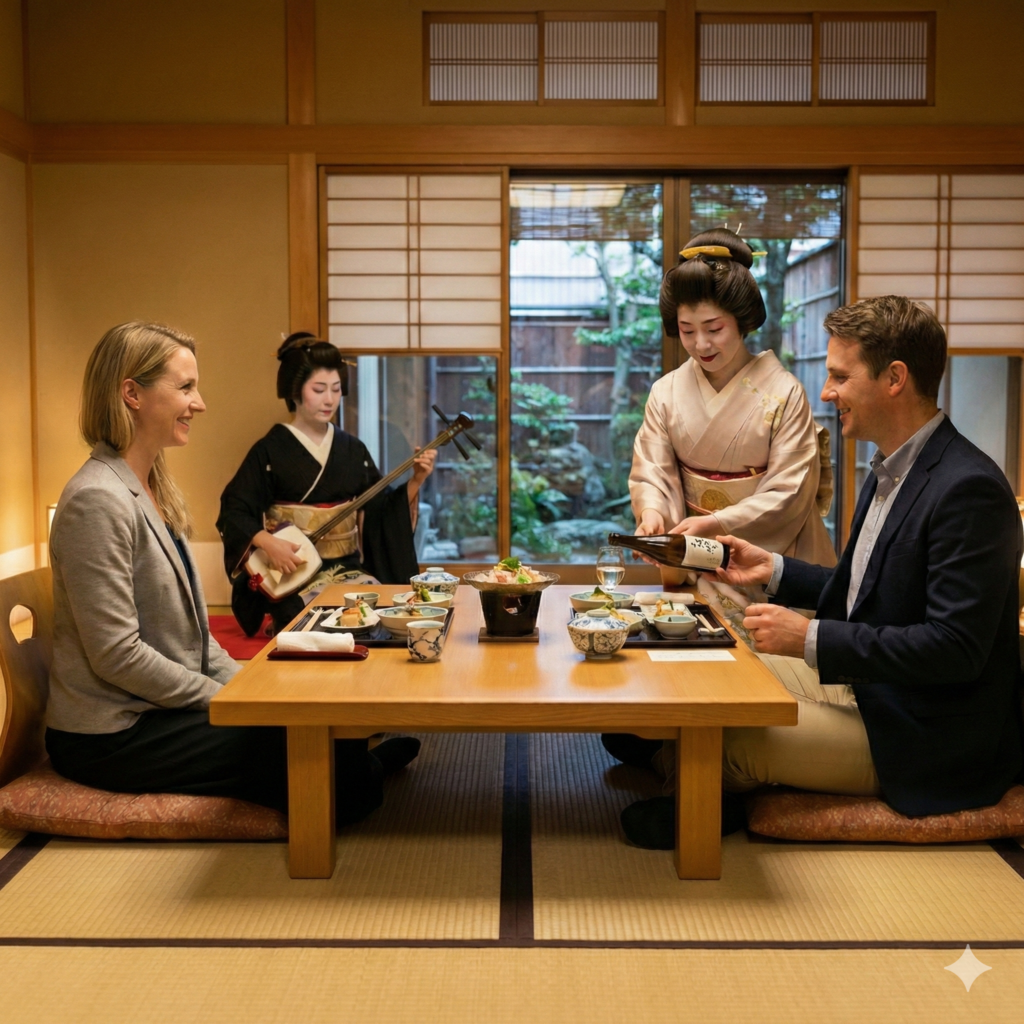
Her choice of a subdued kimono over a bright one is a statement: “My art is what shines, not my clothes.” Her ability to engage in sharp, intellectual conversation while playing the Shamisen is the result of years of rigorous discipline under the Asakusa Kenban.
Conclusion: Don’t Just Watch—Experience “Iki”
A “Maiko” or “Hangyoku” is a beautiful sight for a photograph. But a Geisha is an experience for the soul.
If you wish to touch the heart of Tokyo’s history and witness the pinnacle of Japanese professional hospitality, you must look beyond the apprentice. Experience the “Iki” of the Asakusa Geisha—where true art begins when the training wheels of the apprentice are stripped away.