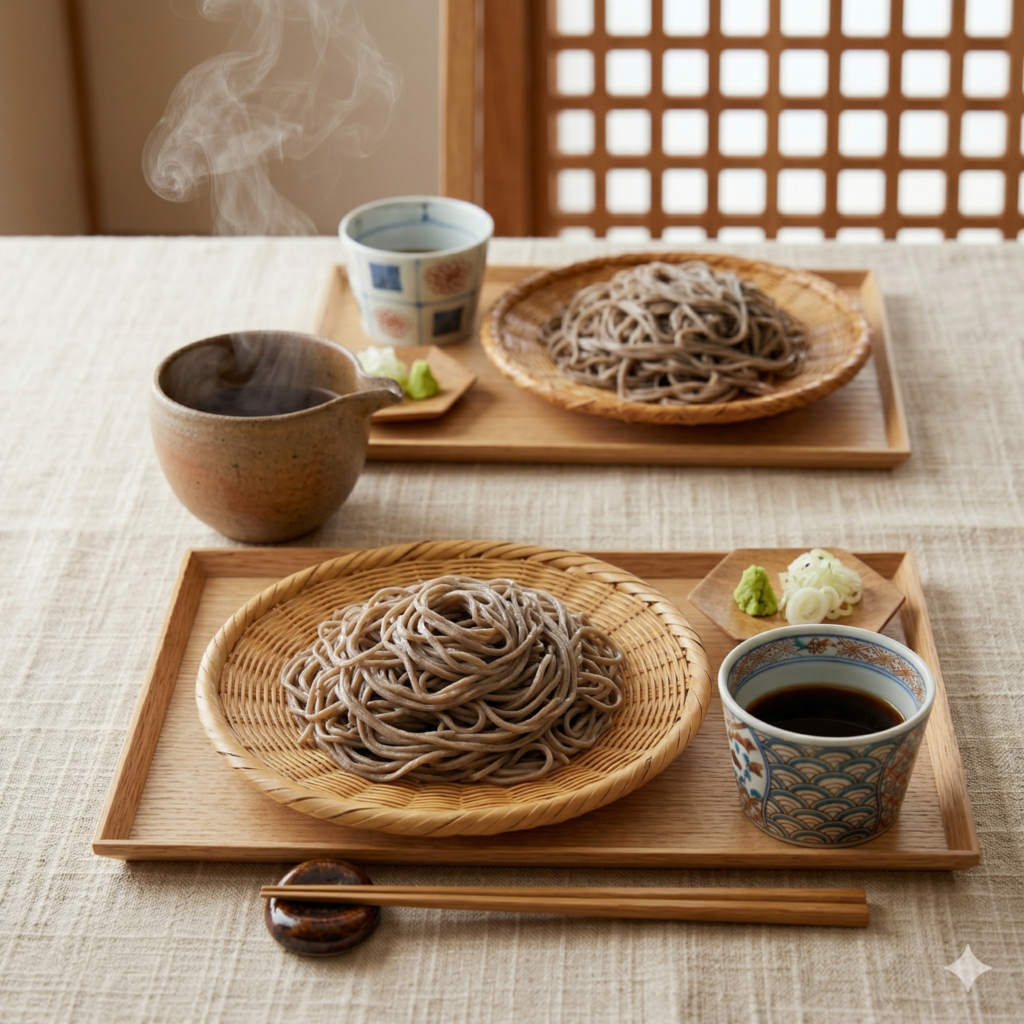
While Japanese ramen has become a globally beloved dish, Japan is home to a wealth of traditional noodles that have been passed down since long before ramen’s rise. The most representative among these are udon and soba. Generally speaking, udon tends to be favored in western Japan, while soba is more popular in the east.
In Edo (modern-day Tokyo) in particular, soba developed as an inseparable part of commoner culture. This close relationship can still be seen in rakugo, a traditional form of comic storytelling that remains beloved today. The gesture of slurping soba is a classic theatrical element in rakugo, and it is not uncommon for the noodles to appear in key scenes of the stories.
It was actually during the Edo period that the current mainstream style of long, thin soba noodles became widely popularized. Around the 18th century, it gained explosive popularity among the famously impatient commoners of Edo as a “fast food” served at easily accessible food stalls. That tradition has been continuously passed down to the present day. Even now, the streets of Tokyo are lined with countless soba shops, ranging from historic, long-established restaurants to casual stand-and-eat joints.